Skip to content
What is synthetic monitoring?

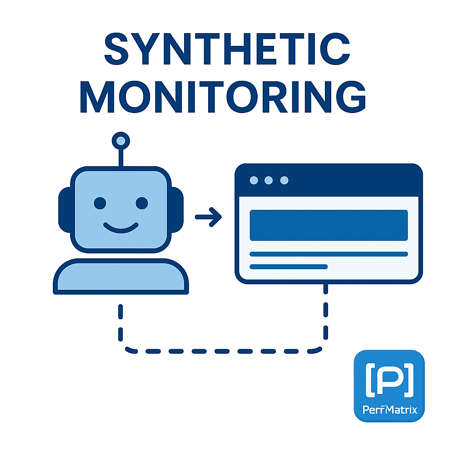
What is Synthetic Monitoring?

Synthetic Monitoring is a technique that continuously simulates user interactions with a system or application to test its performance and availability. It is also known as proactive monitoring. Unlike Real User Monitoring (RUM), which tracks… 
What is an APM Tool?

What is an APM Tool?

Introduction APM stands for Application Performance Monitoring. It’s a tool that is essential for ensuring the reliability, speed, and efficiency of software applications. It helps to track how well a website, mobile application, or business… 

APM vs RUM

APM vs RUM

APM (Application Performance Monitoring) vs RUM (Real-User Monitoring) In the rapidly evolving world of web and application development, maintaining optimal performance and a smooth user experience is critical. Two of the most widely used monitoring… 

JMeter Script Generation through AI

AI is getting better in many areas, so why hasn’t it been used much in performance testing? Creating performance test scripts with AI isn’t very hard. The real challenge is instructing AI, exactly what you… 

Prompt Engineering for Performance Testing

Prompt Engineering for Performance Testing

Prompt engineering for performance testing involves crafting precise and goal-oriented prompts that effectively assess and evaluate the behavior, reliability, and responsiveness of a system, especially when dealing with AI models, APIs, or software components under… 

JMeter Dynamic Value Verification

JMeter Dynamic Value Verification

In Apache JMeter, various types of post-processors are available to capture dynamic values such as session IDs, authentication tokens, or transaction IDs. These post-processors are designed to extract and store data from server responses for…